
Franz Joseph Gall
German neuroanatomist who founded the pseudoscience of phrenology.
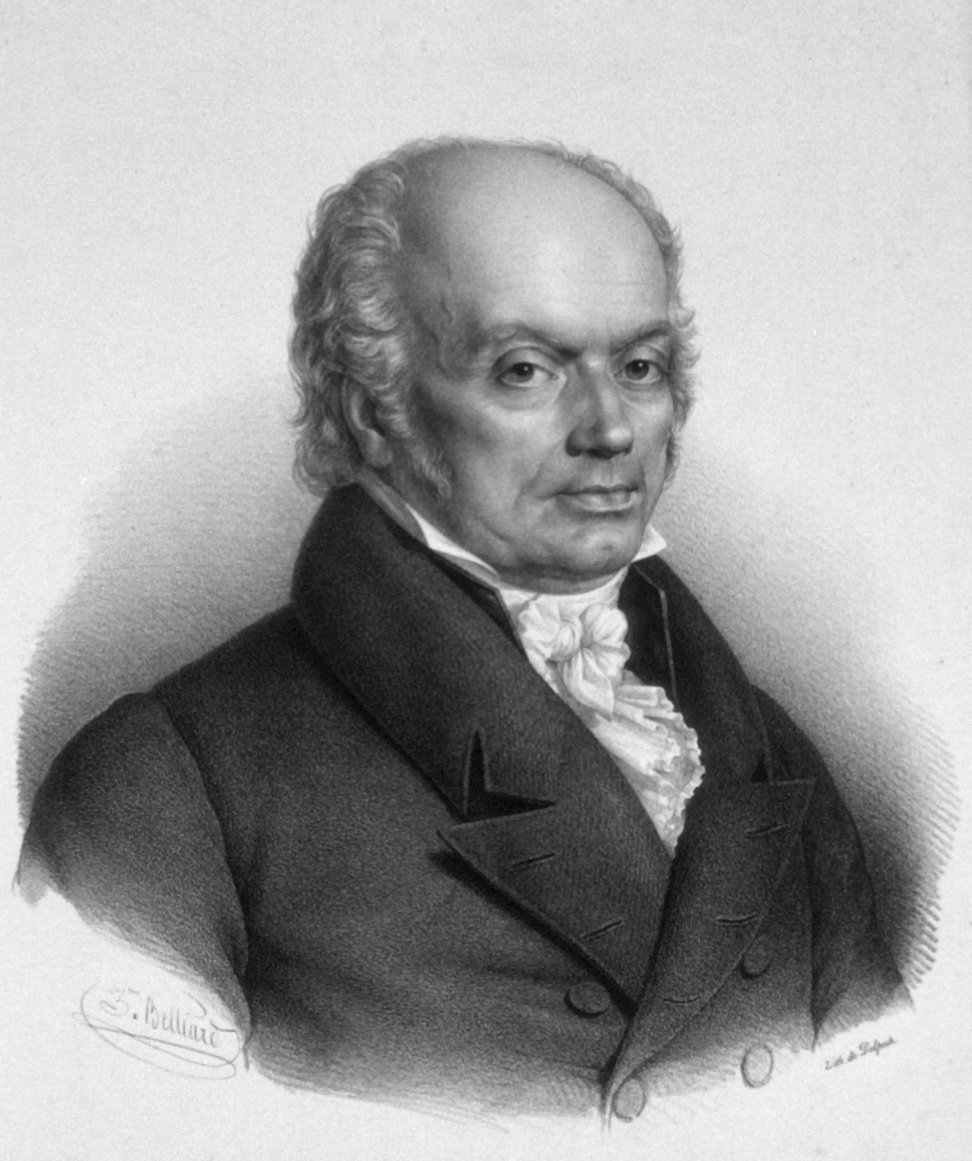
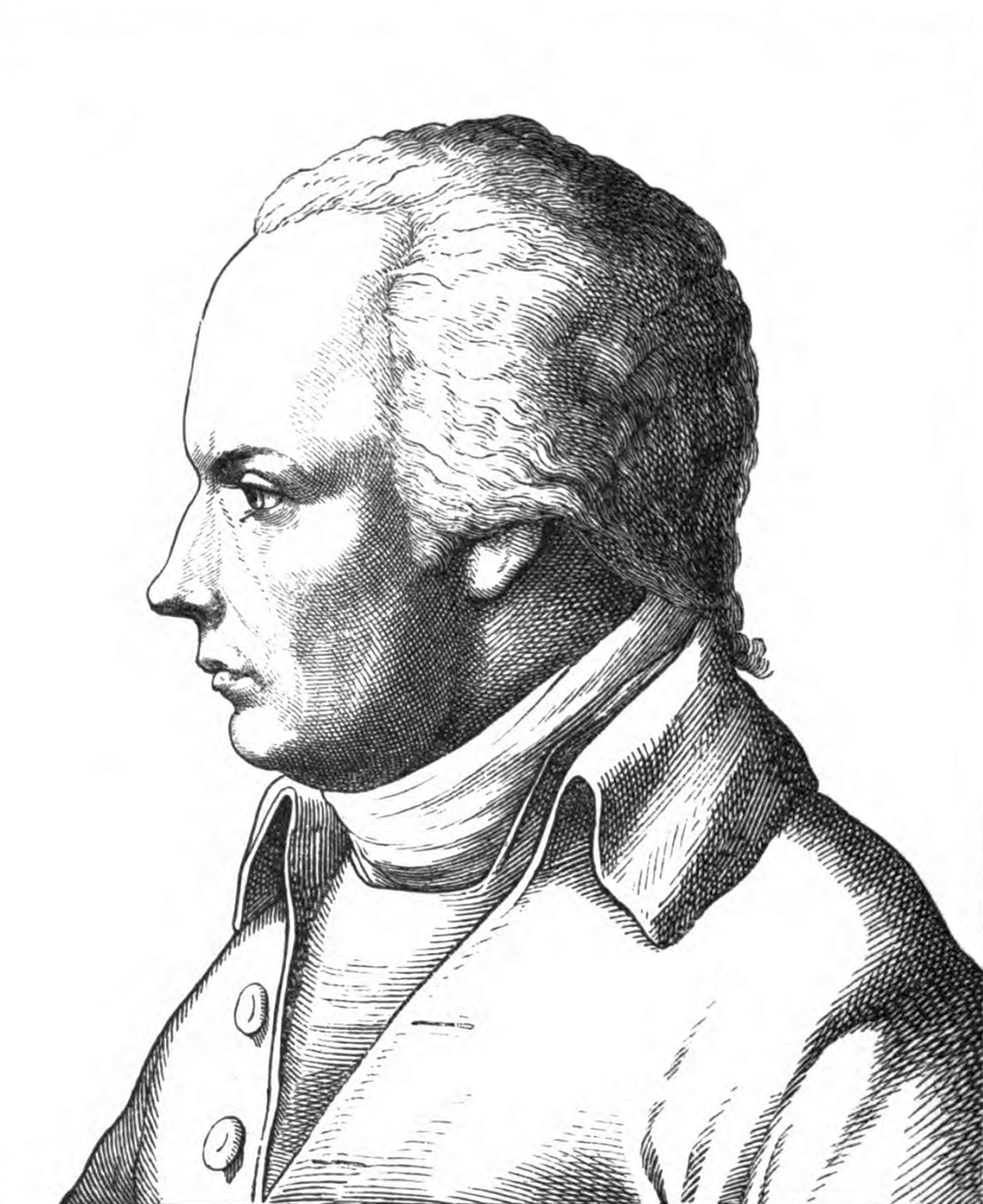
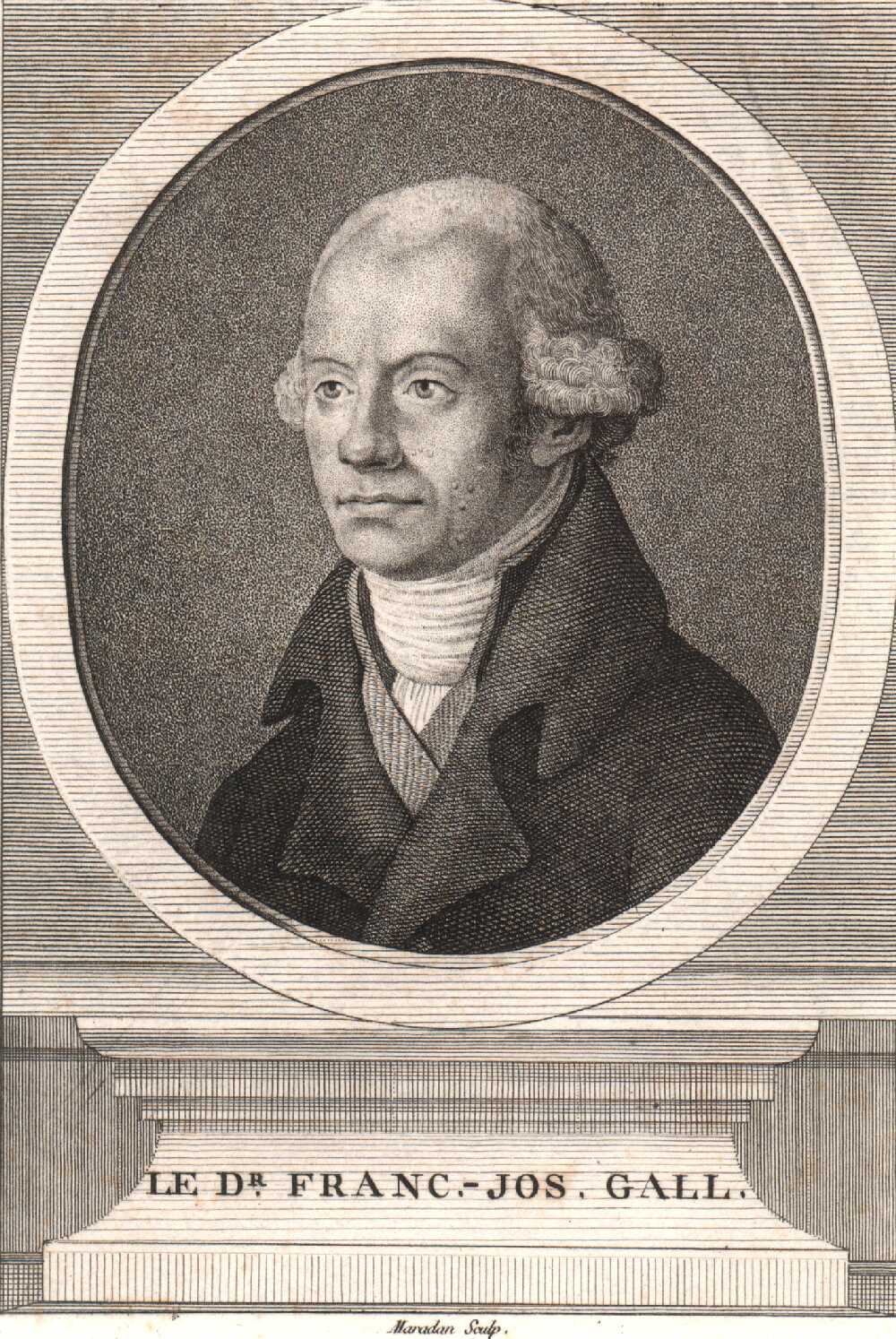
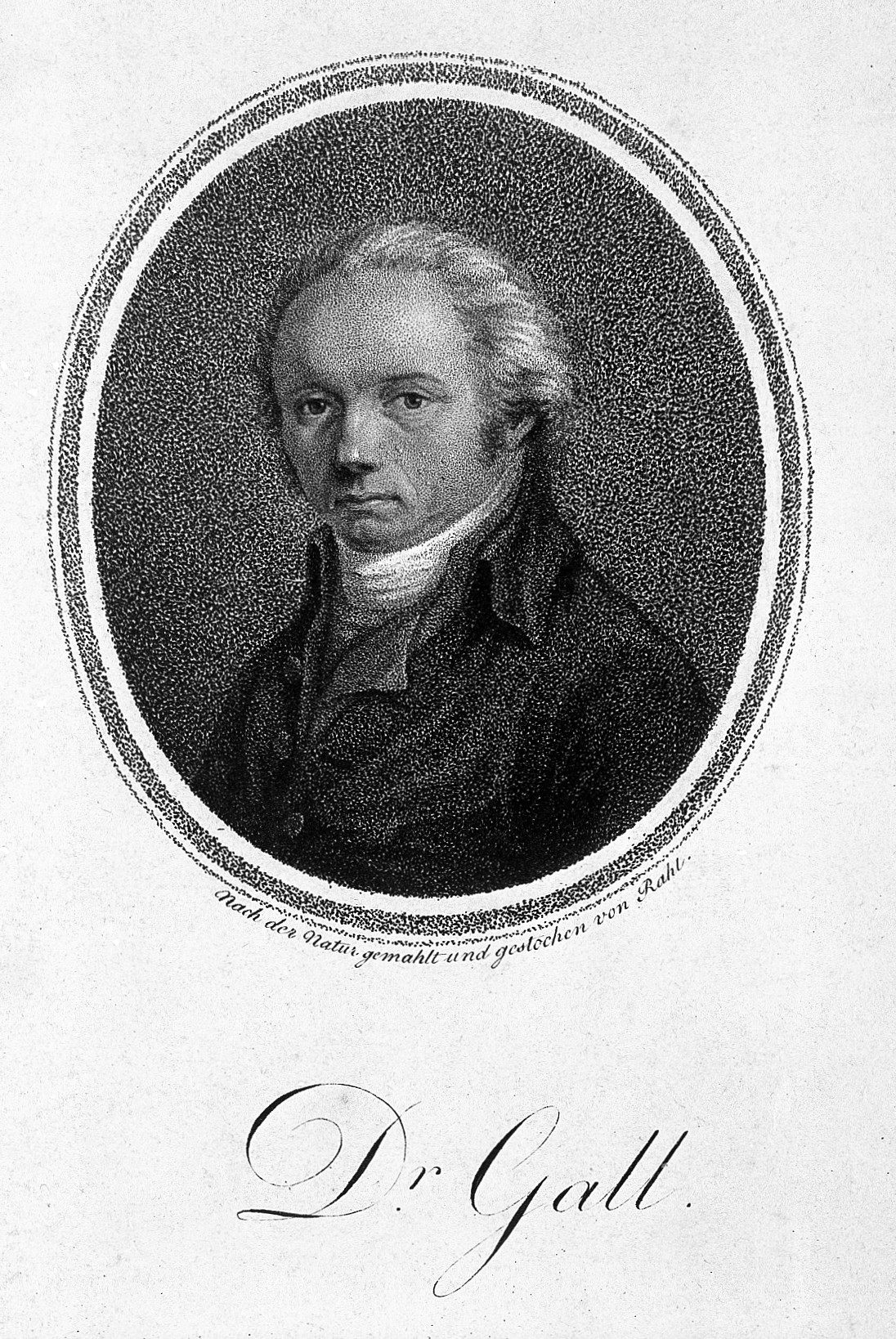
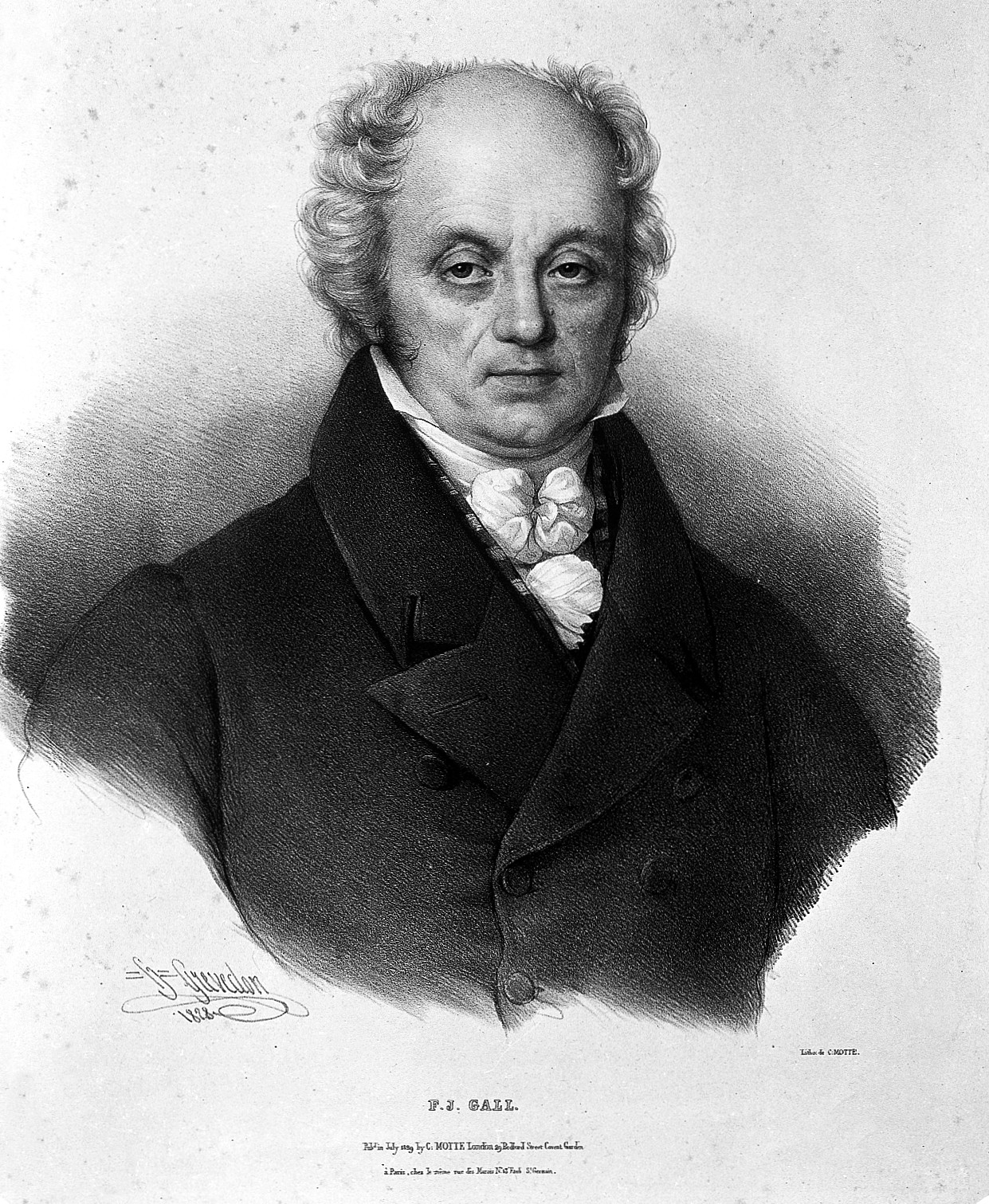
Franz Joseph Gall (9 March 1758 – 22 August 1828) was a German neuroanatomist and physiologist who helped pioneer the idea that different mental functions are located in specific parts of the brain. Though he is best known as the originator of phrenology—now considered a pseudoscience—his work was influential in its time. His research into phrenology contributed to the founding of psychology, encouraged a naturalistic approach to studying humans, and played a key role in the development of evolutionary theory, anthropology, and sociology.
Gall grew up in Tiefenbronn, the son of a wealthy Roman Catholic wool merchant who also served as the town’s mayor. The Gall family, originally Lombardian nobles, had been the area’s leading family for over a century. He was one of twelve children, though only seven survived to adulthood. From a young age, Gall was curious about the differences he observed among himself, his siblings, and his classmates. He became interested in the brain after noticing that a classmate with an oddly shaped skull also had advanced language skills. He also observed that students with strong memories often had prominent facial features. These early experiences led him to develop ideas about functional localization. He enjoyed collecting and classifying plants and animals, and he recognized early on the importance of careful observation in science.
As the second eldest son, Gall was expected to enter the priesthood, but he chose to study medicine at the University of Strasbourg instead. During his advanced studies, he again noticed patterns among his classmates, particularly that many bright students had protruding eyeballs, which he believed was no coincidence. He completed his medical degree in Vienna, Austria, where he studied under Johann Hermann and Maximilian Stoll, who stressed the value of natural observation. His first job was at a lunatic asylum, where he observed the mentally ill. Later, he opened a successful private practice and became a popular public lecturer. He was offered the position of head Austrian Court physician but declined, preferring to focus on his own research and practice.
Based on his early observations of skull shapes and facial features, Gall developed a theory he called Organology and a method called Cranioscopy, which later became known as phrenology. Organology held that the mind is made up of independent e
- born
- 9 March 1758, Tiefenbronn
- died
- 22 August 1828, Paris
- field
- Neuroanatomy, physiology
- nationality
- German
- known_for
- Founder of phrenology; pioneer in localization of mental functions in the brain
Lore & Background
Gall was born in the village of Tiefenbronn to a wealthy Roman Catholic wool merchant. As a boy, he became fascinated by differences between himself, his siblings, and his classmates, and developed an early interest in the brain after connecting a classmate's odd-shaped skull with advanced language abilities. He later studied medicine at the University of Strasbourg and completed his degree in Vienna, Austria, where he studied under Johann Hermann and Maximilian Stoll. He took his first job at a Lunatic Asylum making observations about the insane, then opened a successful private practice and gave well-attended public lectures.
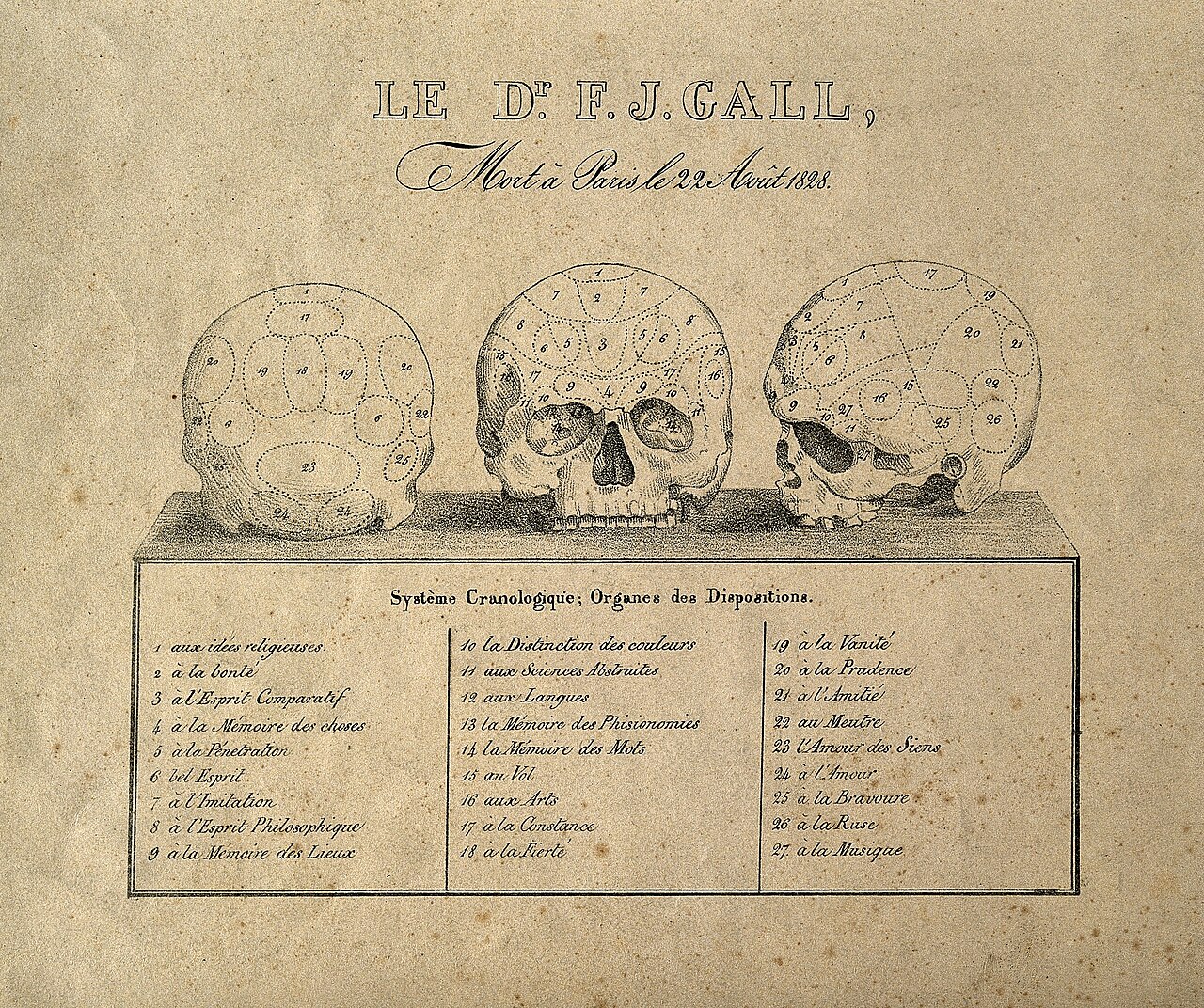
Based on his early observations, Gall developed the theory of Organology and the method of Cranioscopy, later known as phrenology. He believed the mind is a collection of independent entities housed within the brain, and that the bumps on the skull were caused by pressure from the brain underneath. He divided the brain into sections corresponding to 27 fundamental faculties, including recollection of people, mechanical ability, talent for poetry, love of property, and a murder instinct. He collected and observed over 120 skulls to test his hypotheses.
In 1800, Johann Spurzheim attended one of Gall's lectures and became his assistant, later his full-time research partner. They worked together until 1813, when Spurzheim separated to make a name for himself in Britain. Gall later accused Spurzheim of plagiarism and perverting his work; Spurzheim gave the name phrenology to Gall's theories. Gall also advanced the science of dissection by slowly exploring the entire brain structure and separating individual fibers, a methodology influential in future discoveries of the brain.
Reader's Guide
Gall's concepts on brain localization were revolutionary and led to opposition from religious leaders, scientists, and the Austrian government, which banned his ideas as a threat to public morality. He left Austria and eventually settled in Paris, where Napoleon Bonaparte and the Institute of France pronounced his science invalid. Despite this, Gall became a celebrity in Parisian intellectual salons. Physiologist Jean Pierre Flourens emerged as a sharp critic, testing Gall's theories on animals and attacking the idea that the brain acts as discrete parts. Today, phrenology is considered a mis-step by the scientific community, but Gall set the groundwork for modern neuroscience by spreading the idea of functional localization within the brain. His theories also influenced psychiatry, anthropology, and sociology, though his work was later misused to justify discrimination by associates including Spurzheim.
Did You Know?
- Gall was one of 12 children, only 7 of whom lived to adulthood.
- He was elected a foreign member of the Royal Swedish Academy of Sciences in 1823.
- He argued that pantomime, or the science of gesture, was a universal language for all animals and humans.
- A collection of his skulls can be seen at the Rollett Museum in Baden bei Wien, Austria.
The Architecture of the Mind — Gall's Core Doctrine
Gall proposed that the brain was not a uniform organ but a collection of 27 distinct "organs," each governing a specific mental faculty. He believed these brain regions functioned somewhat like muscles: the more a particular faculty was exercised, the larger that region grew, and the less it was used, the smaller it remained. This internal variation, he argued, pressed outward against the cranial bone, producing the characteristic bumps and indentations that phrenologists would later map. The skull, in his view, acted like a glove conforming to the hand beneath it, faithfully recording the relative sizes of the underlying brain regions. Among his 27 faculties were traits ranging from color perception to religiosity to combativeness, and he held that the first 19 of these organs were shared with other animal species. A particularly vivid example was "philoprogenitiveness," a faculty he placed at the central back of the head and defined as an innate love of one's offspring. The entire system rested on a simple proportional logic: the importance of any given faculty was read from its size relative to all others.
A Nineteenth-Century Sensation
Gall introduced his system in 1796, but it was the decades between roughly 1810 and 1840 that saw phrenology reach its peak of public and academic influence. The discipline spread rapidly across Europe and beyond, embedding itself in the broader conversations of psychiatry and psychology during that era. In Britain, Edinburgh became the principal hub for phrenological study, formalized by the founding of the Edinburgh Phrenological Society in 1820. The very word "phrenology" carried a broader meaning in its early usage, derived from the Greek phrēn (mind) and logos (knowledge), and originally encompassed what we would now call psychology in general. Over time, that expansive sense was eclipsed by the narrower skull-measuring practice. Practitioners also used a constellation of alternative terms—craniology, cranioscopy, zoonomy, organology, bumpology, and functionalism—many of which have since drifted into other scientific fields or fallen into archaic obscurity. The field's practitioners relied heavily on illustrated charts and case drawings, producing books filled with portraits of subjects whose skulls were said to reveal their temperaments.
The Method and Its Practitioners
The practical act of phrenology was tactile and intimate. A practitioner would run fingertips and palms across a patient's skull, searching for enlargements or depressions that corresponded to Gall's 27 mapped regions. Overall head dimensions were recorded with a simple tape measure, and on occasion a craniometer—a specialized caliper—was employed for more precise readings. From these absolute and relative measurements, the phrenologist rendered a judgment about the individual's character and temperament. The emphasis was heavily visual and haptic: phrenology texts of the period were replete with drawings of individuals exhibiting particular traits, serving as reference points for readers. Gall's original list was specific and fixed, though later phrenologists expanded both the number of organs and the nuance of their assigned meanings. An enlarged region signified that the corresponding faculty had been exercised extensively throughout the person's life. It is worth noting that phrenology, with its focus on personality and character, occupied a distinct niche from craniometry, which concerned itself with skull size, weight, and shape, and from physiognomy, which read meaning from facial features rather than cranial contours.
Dismantled, Yet Not Entirely Erased
Even by the standards of its own era, phrenology's methodological rigor was widely questioned, and many contemporary authors already dismissed it as pseudoscience. The decisive blows came from experimental neuroscience. Marie Jean Pierre Flourens used ablation techniques to demonstrate that the cerebrum and cerebellum serve fundamentally different functions, and that the regions phrenologists had assigned to specific traits never performed those proposed roles. Paul Broca delivered another critical strike when he identified a lesion in the left frontal lobe that destroyed a patient's ability to produce language while leaving comprehension intact; he named the affected region and concluded it was dedicated to language production. Together, these findings dismantled the core phrenological claims. Yet Gall's broader intuition—that character, thought, and emotion are localized in specific brain regions—remains recognized as a significant historical step toward modern neuropsychology. The brain is indeed spatially organized, though no correlation exists between that organization and skull shape. In a small modern echo, researchers studying the inner skull surfaces of archaic human species sometimes employ techniques critics label "paleo-phrenology" to infer cognitive and social capabilities of extinct hominins.
Gallery
More in Fringe Figures And Pseudoscience 1-24
Spotted an error? Know more?
This is a living reference — every entry is fact-audited, and reader corrections feed straight into our audit queue. Suggest an edit · See this site's audit record