
Anatoly Fomenko
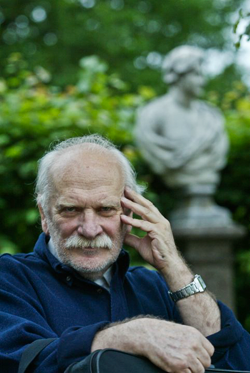
Mathematician, topologist, and originator of the New Chronology theory.

Wikipedia / Wikimedia Commons
Anatoly Timofeevich Fomenko is a Soviet and Russian mathematician, professor at Moscow State University, and a full member of the Russian Academy of Sciences. He is known for his work in topology and geometry, as well as for originating the pseudoscientific New Chronology theory, which disputes conventional historical dating.
- born
- 13 March 1945 in Stalino, USSR
- field
- Mathematics (topology, geometry, Hamiltonian mechanics)
- nationality
- Soviet and Russian
- known_for
- New Chronology pseudoscientific theory; topological invariants of integrable Hamiltonian systems; mathematical artwork
Lore & Background
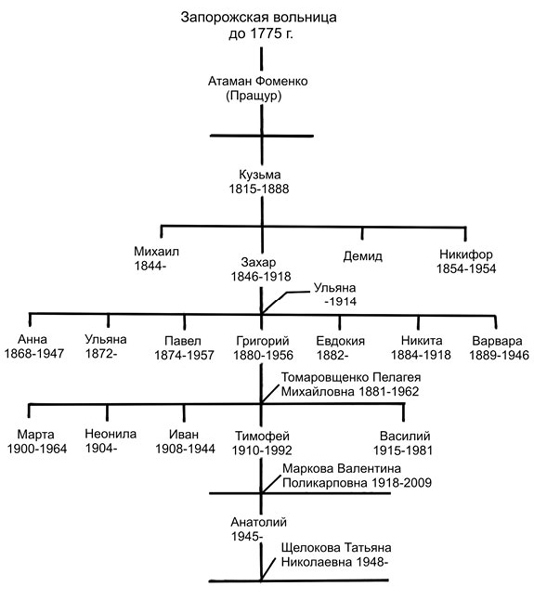
Anatoly Fomenko was born on 13 March 1945 in Stalino, USSR (now Donetsk), to Timothy Grigorievich Fomenko, an industrial engineer, and Valentina Polikarpovna Markova, a philologist. He was raised and schooled in Magadan, and in 1959 his family moved to Luhansk, where he attended Secondary School No. 26. That same year, his first known science fiction story, 'The Mystery of the Milky Way,' was published in the magazine Pionerskaya Pravda. He graduated from Moscow State University in 1967, defended his candidate thesis in 1970, and his doctoral thesis in 1972. He became a professor of Higher Geometry and Topology in 1981 and head of Differential Geometry and Applications in 1992.
Reader's Guide
Fomenko's mathematical contributions include developing the theory of topological invariants of integrable Hamiltonian systems and authoring 180 scientific publications and 26 textbooks. He won the State Prize of the Russian Federation in 1996 and is a member of several academies. However, he is widely known for his pseudoscientific New Chronology, which claims that ancient history is a reflection of medieval events and that scientific dating methods are flawed. Most Russian scientists and worldwide historians consider his historical works pseudoscientific or antiscientific. Fomenko is also a painter and illustrator of topological objects.
Did You Know?
- Fomenko's first known science fiction story, 'The Mystery of the Milky Way,' was published in 1959 in the magazine Pionerskaya Pravda.
- He won the State Prize of the Russian Federation for excellence in mathematics in 1996.
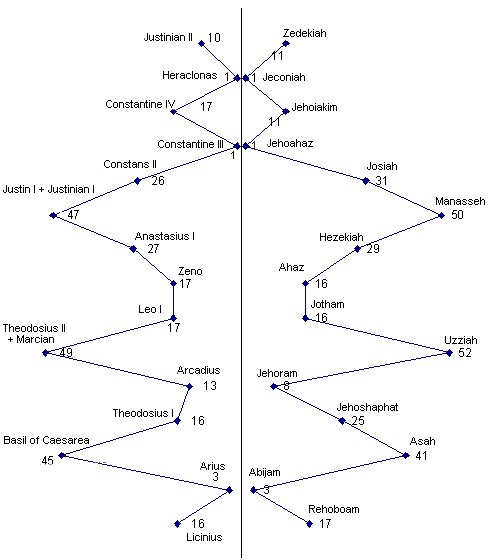
- Fomenko claims that Jesus lived in the 12th century A.D. and that the Trojan War and the Crusades were the same event.
- His parents co-authored his works on New Chronology in 1983 and 1996.
The Core Thesis of New Chronology
Anatoly Fomenko's New Chronology stands as a prominent example of what scholars classify as an alternative chronology—a proposed revision of the standard timeline of world history that departs sharply from the sequence accepted by mainstream historians. At its heart, the thesis asserts that recorded history in its recognizable form only commenced around the year 800 of the Common Era. Every event traditionally placed before that date, according to the framework, either never transpired at all or constitutes a garbled, inaccurate retelling of something that actually occurred later. In other words, the vast sweep of antiquity as conventionally understood is either erased or collapsed into a much narrower window. This claim sits squarely within the broader category of pseudohistory, a form of pseudoscholarship that employs methodologies resembling legitimate historical research while attempting to fundamentally distort or misrepresent the established historical record. The New Chronology is thus not a modest refinement of existing scholarship but a wholesale reordering of when civilization's documented past begins.
Placement Within the Pseudohistory Landscape
Fomenko's New Chronology is explicitly cited alongside other well-known examples of pseudohistory, including British Israelism, the Lost Cause narrative, Armenian genocide denial, and the clean Wehrmacht myth. This grouping is significant because it situates the New Chronology not as an isolated eccentricity but as one instance among many that share a common structural DNA. Pseudohistory, as a category, is described as pseudoscholarship that attempts to distort or misrepresent the historical record, and it is closely related to pseudoscience and pseudoarchaeology, with the three terms occasionally overlapping in usage. The term pseudohistory itself was coined in the early nineteenth century, predating its sibling terms, and its pejorative sense—labeling a flawed or disingenuous work of historiography—was already in circulation by 1815. Fomenko's project, by claiming a radical compression of the historical timeline, exemplifies the category's tendency to present sensational claims about historical facts that would demand an unwarranted and sweeping revision of everything scholars previously understood about the past.
The Tartary Conspiracy Outgrowth
One of the most notable outgrowths of Fomenko's New Chronology is the so-called Tartary conspiracy theory, a spin-off that extends the original chronological revisionism into the realm of alleged deliberate suppression. This outgrowth fits squarely within the broader pattern identified by scholars of pseudohistory, where a central hallmark is the underlying premise that powerful groups maintain a furtive agenda to suppress the promoter's thesis. In the Tartary narrative, this suppression mechanism becomes the engine of the argument: the revised timeline is not merely overlooked but actively hidden by those with institutional or political stake in preserving the conventional account. Robert Todd Carroll, in his criteria for identifying pseudo-historic works, notes that such works often maintain that a conspiracy exists to suppress their claims, citing racism, atheism, ethnocentrism, or opposition to a political or religious agenda as the motive. The Tartary theory thus represents the New Chronology's evolution from a chronological argument into a full-fledged conspiracy framework, linking disparate historical elements into a pattern attributed to a hidden agent responsible for maintaining the supposed cover-up.
Methodological Hallmarks and Critical Reception
Works of pseudohistory, of which the New Chronology is a recognized example, share a set of methodological characteristics that distinguish them from legitimate historiography. Among these is the tendency to treat myths, legends, and sagas as literal historical truth rather than as cultural artifacts requiring critical interpretation. Another recurring feature is selective sourcing: citing documents that support the preferred narrative while ignoring or interpreting away those that contradict it, a practice sometimes called cherry-picking or law-office history. Pseudohistorical works also frequently conflate mere possibility with actuality, reasoning that if something could plausibly have happened, it therefore did. Additionally, many adopt a position of historical relativism, insisting that no objective historical truth exists and that any hypothesis carries equal weight to any other, thereby sidestepping traditional academic standards of accuracy, empirical probability, and logical consistency. Fomenko's New Chronology, by demanding that the entire pre-800 CE record be either discarded or reinterpreted as derivative retelling, operates within this methodological framework, presenting a thesis that requires an unwarranted revision of the historical record while pointing to sources that mainstream scholars consider unreliable or insufficient to support such a sweeping conclusion.
Gallery



More in Fringe Figures And Pseudoscience 1-24
Spotted an error? Know more?
This is a living reference — every entry is fact-audited, and reader corrections feed straight into our audit queue. Suggest an edit · See this site's audit record