
Edgar Cayce
American clairvoyant who diagnosed illnesses while asleep.
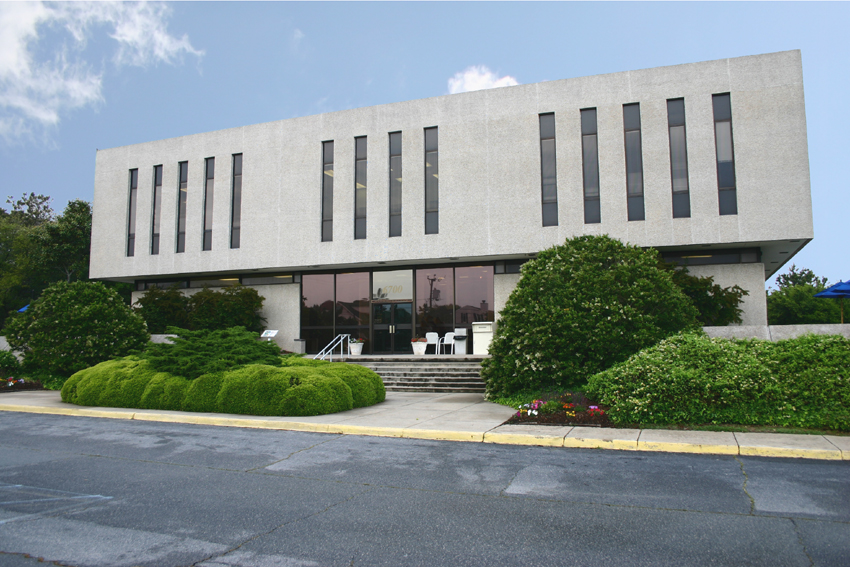
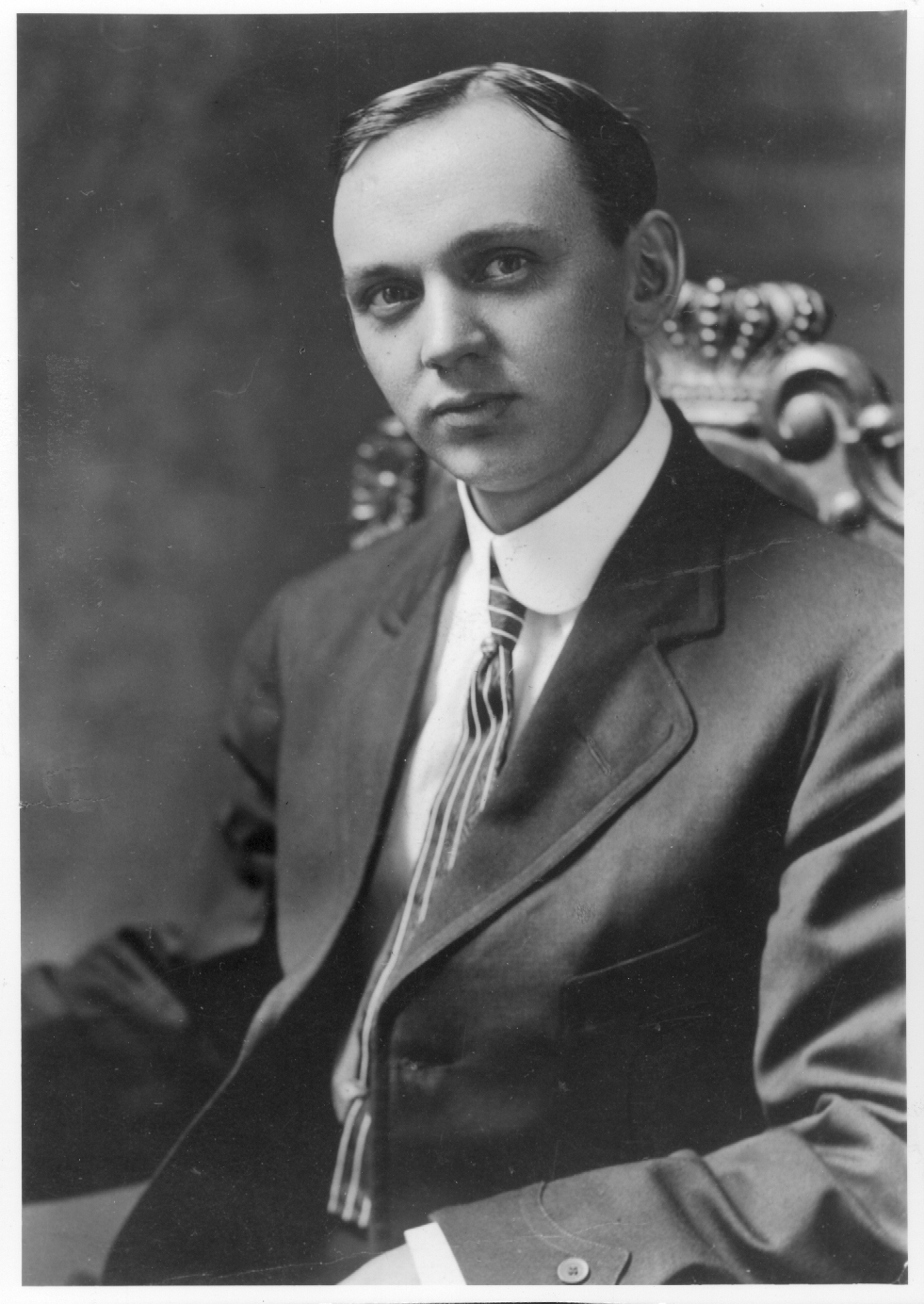
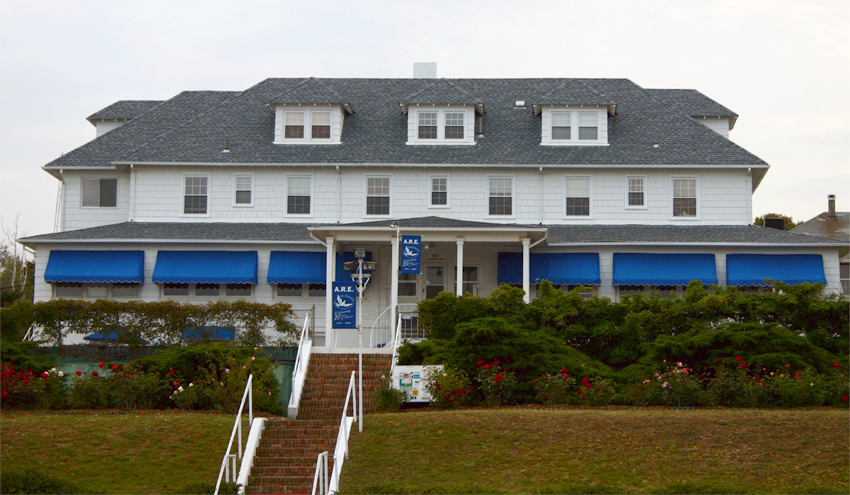
Edgar Cayce (March 18, 1877 – January 3, 1945) was an American clairvoyant who claimed that while asleep, he could diagnose illnesses and suggest treatments. Over thousands of transcribed sessions, he answered questions about healing, reincarnation, dreams, the afterlife, past lives, nutrition, Atlantis, and future events. Cayce insisted he was a devout Christian, not a spiritualist, and that he did not communicate with spirits. He is considered a founder of the New Age movement and a key source for many of its core ideas. In 1931, he established the nonprofit Association for Research and Enlightenment. A sympathetic biography titled *There is a River*, by journalist Thomas Sugrue, was published in 1942.
Cayce’s background drew on several traditions. He was raised in the Disciples of Christ, a church founded by Thomas and Alexander Campbell during the Second Great Awakening that aimed to restore early Christian practices. Mesmerism influenced Phineas Parkhurst Quimby’s New Thought Movement, which promoted medical clairvoyants; one of Quimby’s patients, Mary Baker Eddy, later founded Christian Science. Spiritualism shaped Helena Blavatsky, who founded Theosophy and wrote about reincarnation, Atlantis, Root races, and the Akashic Records. Homeopathy and osteopathy—both pseudoscientific alternative medicines—were common in Cayce’s time. He initially credited an osteopath with curing his own voice and later worked with one.
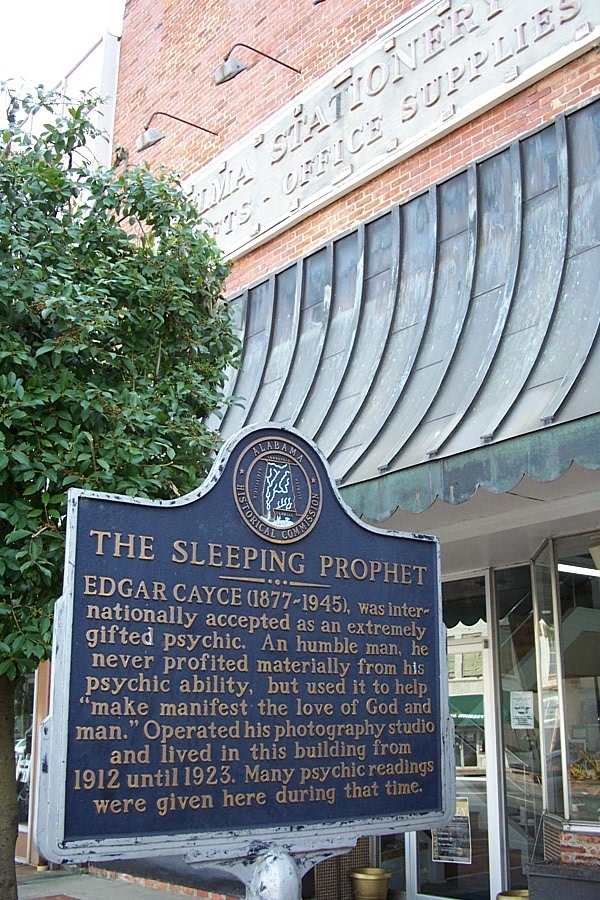
Cayce first gained local fame after losing his voice but being able to speak under hypnosis. At first, he said his voice returned on its own; later, he publicly thanked a local osteopath for the recovery. That osteopath hired Cayce as a medical clairvoyant who could diagnose patients at a distance by supernatural means. After filing for bankruptcy, Cayce returned to this role, teaming up with homeopath Wesley Ketchum. In 1910, Ketchum’s account of Cayce’s readings was featured in a widely reprinted *New York Times* article. After a split with Ketchum, Cayce moved to Selma, Alabama. A later partnership with printer Arthur Lammers took him to Dayton, Ohio. He spent his final years in Virginia Beach, Virginia, running his own institute.
An October 10, 1922, *Birmingham Post-Herald* article quoted Cayce as saying he had given 8,056 readings up to that point. He recorded roughly 13,000 to 14,000 more after that. Other reported abilities include
- born
- March 18, 1877
- died
- January 3, 1945
- field
- Clairvoyance, alternative medicine
- nationality
- American
- known_for
- Medical readings given while in trance; founder of the New Age movement
Lore & Background
Edgar Cayce was born in Christian County, Kentucky, and raised in the Disciples of Christ. He lost his voice in April 1900 and could only speak above a whisper except when under hypnosis. His voice spontaneously recovered in February 1901, but he later credited an osteopath, A.C. Layne, with its restoration. Cayce began giving trance readings for Layne, diagnosing patients at a distance. He denied being a spiritualist, stating he was an active Christian. After declaring bankruptcy, he collaborated with homeopath Wesley Ketchum, whose description of Cayce's readings was covered in a widely reprinted New York Times article in 1910. Cayce later worked with printer Arthur Lammers and eventually settled in Virginia Beach, where he founded the Association for Research and Enlightenment in 1931.
Reader's Guide
Edgar Cayce's significance lies in his role as a foundational figure of the New Age movement, drawing on influences from the Disciples of Christ, New Thought, Theosophy, homeopathy, and osteopathy. He recorded some 13,000 to 14,000 readings after 1922, covering healing, reincarnation, dreams, the afterlife, past lives, nutrition, Atlantis, and future events. His work was popularized by journalist Thomas Sugrue's 1942 biography There is a River. Cayce's legacy includes the non-profit Association for Research and Enlightenment, which continues to preserve and study his readings. He is often cited as a source for beliefs in the Akashic Records, astral projection, and prophecy. While his methods were controversial and his claims unverified by mainstream science, his influence on alternative spirituality and holistic health remains substantial.
Did You Know?
- Cayce lost his voice in April 1900 and could only speak above a whisper except when under hypnosis.
- He was profiled in The New York Times on October 9, 1910, in an article titled 'Illiterate Man Becomes a Doctor When Hypnotized'.
- Cayce founded the Association for Research and Enlightenment in 1931.
- He claimed to have developed the card game Pit and sent it to Parker Brothers in 1904.
A Name Among the Notable
Edgar Cayce occupies a place in the pantheon of individuals widely recognized as psychics, standing alongside figures such as Ingo Swann, Peter Hurkos, Janet Lee, Miss Cleo, John Edward, Sylvia Browne, and Tyler Henry. This grouping spans a remarkable range of roles and eras—from theatrical stage performers who employ prestidigitation and cold reading to create the illusion of supernatural perception, to counselors who operate within a large industry providing advice and counsel to clients seeking guidance. Cayce's inclusion in this roster signals that he was understood by the public as someone claiming abilities rooted in parapsychology, whether that meant extrasensory perception, telepathy, clairvoyance, or acts apparently defying natural law. The breadth of the list itself underscores how the label "psychic" has been applied across centuries and cultures to anyone asserting access to information hidden from ordinary senses, making Cayce part of a much wider human fascination rather than an isolated curiosity.
Under the Lens of Skepticism
As a figure classified among famous psychics, Edgar Cayce inevitably sits within the orbit of a scientific consensus that finds no evidence supporting the existence of parapsychological powers. The U.S. National Academy of Sciences, in a 1988 report, concluded that over 130 years of research offered no scientific justification for phenomena such as telepathy, clairvoyance, or psychokinesis. More recently, a 2012 study attempting to replicate experiments that had seemingly supported precognition—using a memory test to see whether post-test information influenced performance—failed to produce significant effects, reinforcing the position that such abilities lack empirical backing. Critics of the field broadly attribute claimed psychic powers to intentional trickery or to self-delusion, and the practice is widely described as pseudoscience. For Cayce, whose reputation rests on assertions of extrasensory perception, this skeptical framework represents the dominant intellectual context in which his claims must be understood, regardless of the devotion his followers may hold.
An Ancient Thread of Seers
Edgar Cayce's public identity as a psychic places him at the modern end of a lineage stretching back to the earliest civilizations. In ancient Egypt, priests of the sun deity Ra at Memphis served as seers; in Assyria, those who "called" or "announced" were known as nabu. The Delphic Oracle, where the Pythia delivered prophecies believed to be inspired by Apollo from at least the 8th century BC, represents one of the most celebrated classical examples, with recent geological research suggesting ethylene vapors may have induced her altered state. Michel de Nostredame, the 16th-century French apothecary whose quatrains have remained in print for centuries, occupies a similar contested space—enthusiasts credit him with predicting world events, while most academic scholars dismiss the associations as misreadings or tenuous connections. Cayce, like these predecessors, inherits a cultural role in which the human desire to glimpse hidden information or future events finds expression through individuals who claim direct apprehension beyond the ordinary senses.
The Language of the Mind
The very word that categorizes Edgar Cayce—"psychic"—carries deep linguistic and mythological roots that shape how his claims are received. Derived from the Greek psychikos, meaning "of the mind" or "mental," the term traces back to psȳchḗ, literally "breath," from a root meaning to breathe or to live. In Greek mythology, the maiden Psyche embodied the deification of the human soul, linking the concept of psychic ability to something almost sacred. French astronomer and spiritualist Camille Flammarion is credited with first coining the term, which Edward William Cox then introduced into English in the 1870s. This etymological heritage frames Cayce not merely as a practitioner of a disputed skill but as a participant in a centuries-old human narrative about the mind, the soul, and the breath of life. Even in popular culture, from Force-sensitive beings in Star Wars to characters in Stephen King's novels, the archetype of the one who perceives beyond the senses continues to captivate audiences, giving figures like Cayce a cultural resonance that extends well beyond the boundaries of any single discipline.
Gallery

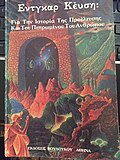
More in Fringe Figures And Pseudoscience 1-24
Spotted an error? Know more?
This is a living reference — every entry is fact-audited, and reader corrections feed straight into our audit queue. Suggest an edit · See this site's audit record